Is it safe to use chemical drain cleaner on a clog?
Chemical drain cleaner is best avoided on anything beyond a simple sink clog, and there are mechanical reasons for that. The liquid runs around a solid clog rather than through it, so it can sit in the pipe for hours without breaking anything loose. What it leaves behind is caustic. When a plumber then feeds a cable or a camera into that line, the standing chemical can splash or burn skin and eyes. Tell the plumber if you used any. On older galvanized or cast iron pipe, the chemicals can also worsen corrosion on a wall that is already rough or thin. In a bellied section they pool and stay in contact with the pipe far longer than intended. Never mix two products, and never use them in a toilet or in a line that is backing up from several drains. A plunger or a hand drain snake is the safer first step for one slow fixture. If a plunger or snake does not clear a single sink or tub, or if more than one drain is affected, the job needs a cable machine or hydro jetting from an independent plumber. Expert Plumbers Co can connect you with one in Gresham, SC who handles this.
If you have already used a chemical product, the safest steps are simple. Do not add a second product or hot water on top of it, and do not run a plunger hard, since the splashback can contain caustic liquid. Wear gloves and eye protection if you need to go near the drain, and keep the room ventilated, because fumes can be strong in small bathrooms. Write down the product name and roughly how much was used, or keep the bottle, so the plumber can see the ingredients and take care when opening the trap. Pour no more down the line after you have called. A plunger used gently and a hand-operated drain snake do the same job without chemistry. Foaming enzyme products are milder, but they work slowly and only on soft organic buildup, not on hair, roots, or a damaged pipe. When in doubt, wait for the plumber.
What is a bellied or sagging sewer line, and can it be cleaned?
A belly is a low spot in the sewer line where the pipe has sunk. Water and waste stop and sit in the dip instead of flowing on. Solids settle there, grease coats the pipe wall and paper catches. You see it as drains that run slow, a toilet that needs repeated flushing, or a line that clogs again a few weeks after it was cleared.
The cause is usually a pipe that lost support underneath it, or a joint that shifted.
Can it be cleaned? Yes, up to a point. A cable machine can open a blockage sitting in the belly, and hydro jetting can wash grease and buildup off the pipe wall. Neither fixes the dip. The belly keeps holding water, so the buildup returns.
A camera inspection tells you the rest. It shows how deep the belly is, whether the pipe is cracked, and whether roots have entered a joint. Cost depends on how deep the line is, how much has to be dug up or removed, the materials involved and any permit.
Safe homeowner check: note whether one fixture or the whole house is slow. One fixture points to its own branch. Every drain slow points to the main line.
Stop running water and call now if sewage is coming up in a tub, shower or floor drain.
Expert Plumbers Co is a referral service. Call (380) 262-9173 and we will connect you with a plumber serving Gresham, SC for Drain Cleaning or Emergency Drain Cleaning.
Left alone, a belly tends to get worse in a predictable way. The standing water softens the soil around the pipe further, the dip deepens, and the clogs come back faster each time. Another warning sign is a faint sewage smell in the yard or a patch of lawn that sinks or stays wet, which can mean the pipe has separated at a joint. Older homes with clay or cast iron lines are the most likely to have a belly, because those pipes sit in sections and shift as soil settles. Newer plastic lines can also sag when the trench bedding was uneven. When you speak to the plumber, ask what the camera shows about the depth of the dip and the condition of the pipe at that spot. If the pipe is intact, a spot repair may be possible. If it is cracked, replacing that section is the lasting fix.
We run a cafe and the kitchen line keeps blocking. Is that the same job as a house drain?
Not quite. A kitchen line that blocks again and again is usually a grease problem, and that is a different job from a house drain.
A cafe pushes far more fat, oil and food solids down the pipe than a home does. The grease cools, sticks to the pipe wall and builds layer on layer. The opening shrinks each week. That is why the blockage returns on a short cycle.
A grease interceptor, also called a grease trap, sits between the kitchen and the main line. It catches fat before it travels downstream. It only works while it has room. Once it is overfull it stops holding grease and passes it straight into the line. So it needs servicing on a schedule, not just when something goes wrong. Many jurisdictions require an interceptor and expect records of each servicing. That is a code matter, so check with your local authority.
A cable machine punches a channel through the grease and leaves the coating on the wall. Water drains for a while, then the channel closes again. A commercial line usually needs hydro jetting, which uses high-pressure water to strip the wall clean. A camera inspection then checks the pipe underneath for cracks, roots or a sag that holds water.
One slow sink is a branch problem. Every fixture backing up points to the main line.
A blocked line in a food business is a shutdown risk, so timing matters. If water is rising near the prep area, stop using the sinks and call.
What the job involves depends on access to the line, how much has to be opened up, the condition of the pipe and any permit requirement. Expert Plumbers Co is a referral service. Call (380) 262-9173 and we will refer your cafe to an independent local plumber in Gresham, SC.
Keep a servicing record and a routine. Write down the date each interceptor is serviced and by whom. Authorities that require interceptors usually ask to see those records.
Train kitchen staff on what goes down the drain. Scrape plates and pans into the trash first, fit fine mesh strainers in every sink, and never pour fryer oil down any drain, even with hot water, because it cools further down the line and sets. Hot water and soap only move grease along the pipe. They do not remove it.
Learn the warning signs of a full interceptor: slow draining at the sinks nearest it, a sour or rancid smell, or grease showing in the outlet chamber.
Set the jetting interval after a camera inspection shows how fast the coating builds, so cleaning happens before a lunch rush is lost to a backup. Mention any recent menu change toward fried or fatty food when you call.
There is a soggy strip, a sinkhole or an unusually green line of grass over where my sewer runs. Is that a broken sewer line?
It can be. A wet strip, a dip in the lawn or a stripe of grass that is greener than the rest, all following the path of the sewer, is a classic sign that the pipe is leaking into the soil. Waste water carries nutrients, so the grass above it grows lush while the ground underneath stays soggy.
A sinkhole is more serious. If soil is washing into a cracked or separated pipe, it leaves a void that grows over time. The surface may look fine until the roof of that void gives way. Keep people, pets and vehicles off the area and do not fill it yourself with a quick load of dirt, because the hole will usually return.
Other things can look similar, so check before assuming. A leaking irrigation line, a broken water supply pipe or a downspout discharging at that spot can all soak a strip of lawn. A simple test: shut off every tap and appliance, then look at your water meter. If it keeps moving, the leak is likely on the supply side, not the sewer. If the meter is still, and you also notice slow drains, gurgling, a sewage smell outdoors or backups, the sewer is the stronger suspect.
Safe checks you can do:
Note where the wet or green strip runs and whether it lines up with the cleanout or the path to the street. Reduce water use until the line is looked at.
Stop running water and call now if sewage is surfacing, a hole is opening, or drains inside the house are backing up.
Cleaning alone does not fix a broken pipe. A camera inspection is how a plumber finds the break, shows how far the damage runs and tells whether the pipe is cracked, offset at a joint or collapsed. Repair can then be a spot repair, a liner through the existing pipe, or replacement of a section. Cost is driven by depth, length of pipe affected, what sits on top of it such as a driveway, trees or a patio, how much has to be excavated, the pipe material and permits under local code. To be connected with an independent local plumber in Gresham, SC, call Expert Plumbers Co on (380) 262-9173.
Does drain cleaning or sewer line repair need a permit?
You need a drain cleared or a sewer line fixed, and you want to know whether the work needs a permit before anyone starts. The answer depends on what is being done.
Drain cleaning usually needs no permit. Clearing a blockage with a cable machine, running a hydro jet, or putting a camera in the line does not change the plumbing system, so most areas treat it as maintenance.
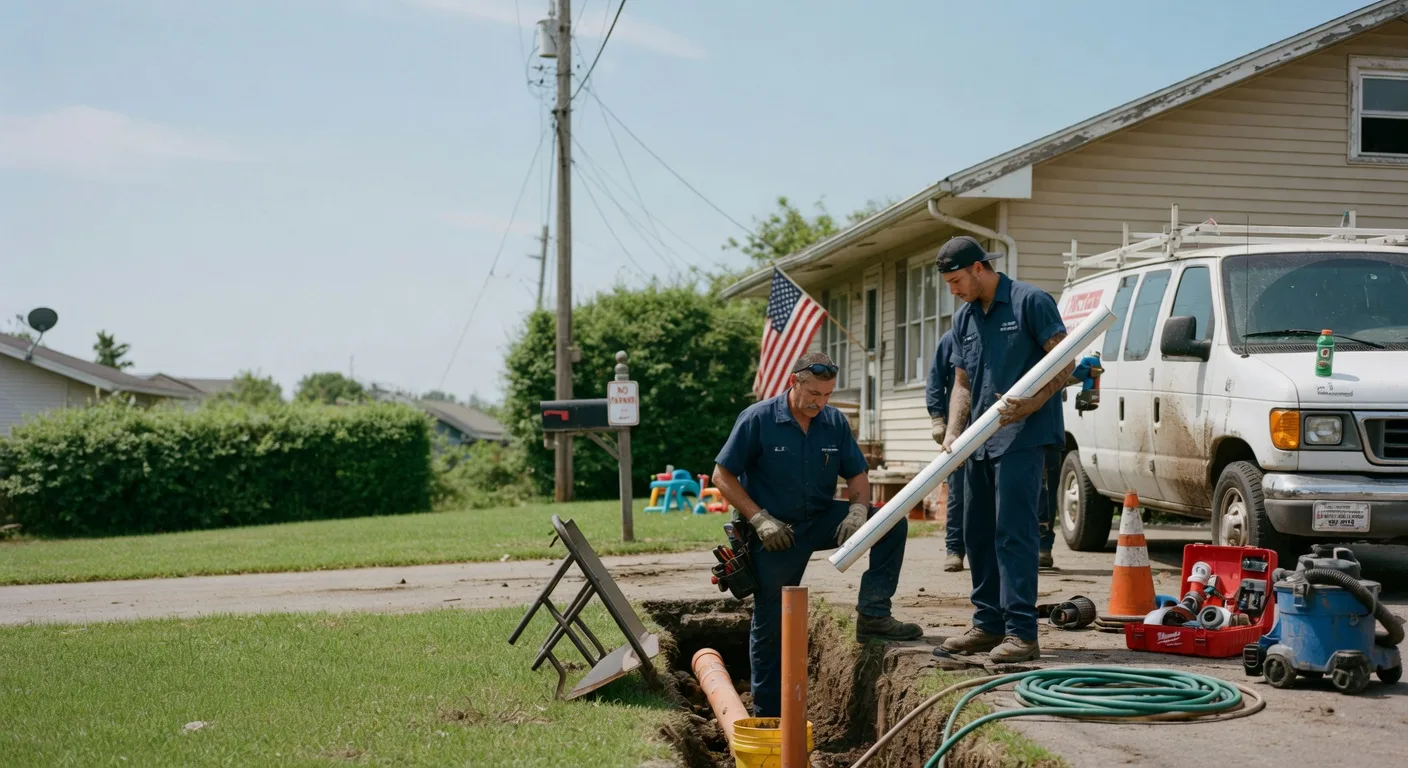
Repair or replacement of a building sewer usually does need one. The building sewer is the pipe from the house to the main in the street. Fixing a collapsed section, replacing a root-damaged clay line, or digging out a bellied run changes the system, so it is normally permitted and inspected. If the dig reaches the street, curb or public right of way, a separate permit may be needed. Rules vary by area, so check with your local building or public works office, or ask the plumber what applies in Gresham, SC.
The cause points the way. Root intrusion at a clay joint, grease build-up on the pipe wall, scale in cast iron or a blocked vent stack are usually cleaning jobs. A failed sewer lateral, a bellied line that holds water, or a broken pipe is a repair, and that is where permits come in.
One slow fixture rarely leads to a permit question. If every drain in the house is backing up, the main line is involved, and a camera inspection will show whether cleaning will do or a repair is needed.
Safe homeowner check: Find your cleanout and note where it is. Find out where your property line sits, since that affects who is responsible for which part of the line. Call your local building department and ask what work needs a permit.
Stop running water and call now if sewage is coming up inside, if the yard is wet or sunken over the line, or if you smell sewage. Safety comes before paperwork.
A cable machine is enough for a soft clog. Hydro jetting is the next step for grease or scale. A camera inspection shows whether a repair is needed, and that finding is usually what leads to a permit.
Expert Plumbers Co is a referral service. We connect you with an independent local plumber in Gresham, SC. Call (380) 262-9173.
Ask the plumber who handles the permit, whether an inspection is required, and how that affects the schedule. The scope depends on how much of the line has to be opened up, access, parts and materials, any right-of-way work, and the code requirements in your area.